
Key Highlights
- A bull market and a bear market show two different market trends in stock prices during a sustained period of time.
- A bull run often makes people feel hopeful. At this time, prices go up and there is stronger economic growth.
- A bear phase can bring lower prices, fear, and more market volatility.
- A market correction can take place even when the trend is going up for a longer period. So, small drops in prices are normal.
- Your investment strategy needs to fit your goals, time horizon, and risk tolerance.
- A diversified portfolio can help you deal with market volatility as market trends keep changing.
Introduction
If you invest or want to put money into stocks, you need to know how stock prices change with market cycles. The market does not always go up, and it does not always go down. Stock prices move up and down because of things like economic growth, how people feel about the market, and changes in trust.
When you know what bull and bear markets are, you can make better investment decisions and not feel worried every time news about the market comes up. This helps you keep your eye on your goals and not get lost in short-term market noise.
Understanding Bull and Bear Markets
A simple way to say it is this: when the stock market has a bull run, prices go up. A bear market means prices go down. The usual rule is when a broad market index or a stock market index moves 20% or more over at least two months.
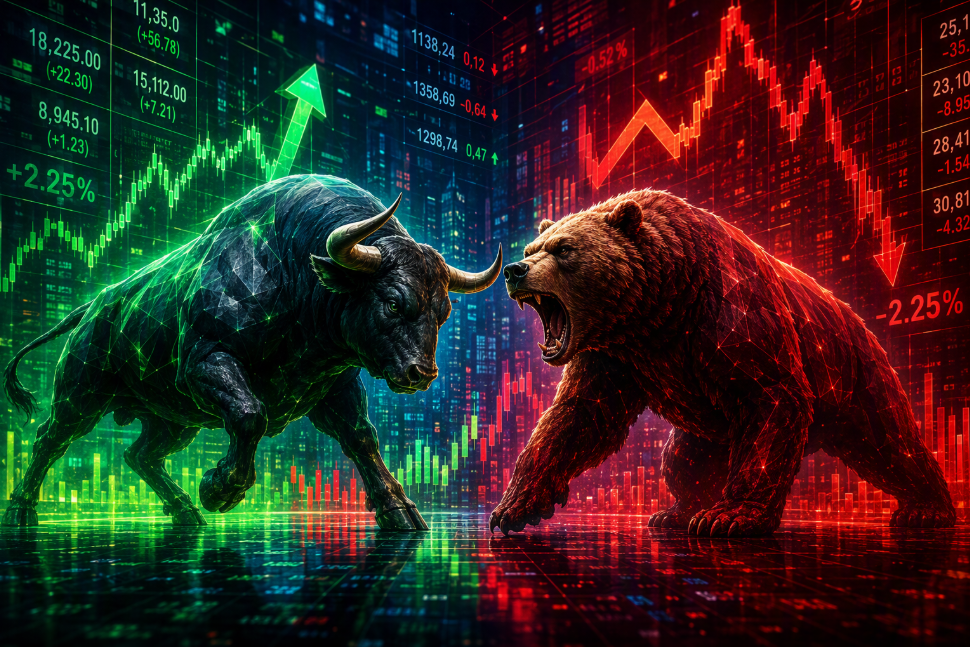
The names match the image well. A bull market moves up like bulls do, and bear attacks in a bear market move down. For someone new, this is the main way to tell them apart. Still, when you make your investment strategy, you should look deeper than just these names. A market can change bit by bit, and some sectors can go one way while others go another way.
What Defines a Bull or Bear Market?
A bull market happens when stock prices go up by 20% or more from the recent lows. They also stay higher for at least two months. A bear market is the opposite. In a bear market, stock prices drop by 20% or more from the recent highs and keep falling for a sustained period of time, often around two months or more.
That time need is important. A big fall in the market over a few days does not mean the market is now in a bear phase. In the same way, a short rise does not show there is a strong bull trend yet. You should look at the market trends and see how long they last. It helps to study the broader market before you make a decision.
This is the point where many people mix up a market correction with a bear market. A market correction is a small drop that happens in a bigger trend. To know which phase you are in, watch how big the change is, the move from the recent highs or recent lows, and how long that period of time lasts.
Key Characteristics and Differences
You can feel the change in the air between these two times. In a bull run, stock prices go up. Investor confidence gets stronger in this time. In a bear market, there is a downward trend. People feel fear, and this leads to different investment decisions.
The economy can change depending on the phase it is in. A bull market can come when growth is strong. People also feel more ready to invest at this time. A bear market is often seen when things do not look good for the economy. There is also more selling pressure then.
| Feature | Bull Market | Bear Market |
|---|---|---|
| Stock prices | Rising by 20% or more | Falling by 20% or more |
| Investor confidence | High or improving | Low or weakening |
| Market direction | Bull run | Downward trend |
| Typical behavior | Buying increases | Selling increases |
| Investment decisions | Often growth-focused | Often more defensive |
Signals of Bull and Bear Markets
It can be hard to see a change in the market early, but there are some signs to look for. People who invest in financial markets often check technical analysis, the way the price is moving, and if there is any change in market sentiment. These things can help show if financial markets are likely to get stronger or weaker.
No one sign can tell you for sure what will happen. Market conditions can shift slowly, and market volatility can get higher before you even spot a strong trend. This is why it helps to use price signals along with economic facts and how investors act. The next parts will explain these signals in detail.
Market Trend Indicators
If you want to know if the stock market is in a bull or bear phase, start by checking where a big stock market index is going. A wide move in the index often gives better clues than just a few news stories about stocks. Using technical analysis is helpful, but it is better when you also trust common sense.
You need to watch how steady the move is. If you see more market volatility, repeated pullbacks, or weakness in the broader market, it may show that a bull run is getting weak. But, if things start to get better after a deep fall, it can mean a recovery is coming.
Helpful indicators include:
- The amount the stock market changes from recent highs or recent lows in a big stock market index
- How long this movement in the stock market goes on
- If market volatility is getting stronger or going down
- Any changes in economic indicators that show growth
- If the market trends are showing up in all sectors or just in one
Economic Data and Investor Sentiment
Markets do not change just because of price. Economic indicators and the mood of people are very important too. If investor confidence and consumer confidence are strong, the market will often stay strong. If both start to feel weak, pressure can build up very fast.
Interest rates matter a lot. When there are lower interest rates, people and companies can borrow money easily. This means they often buy more things and put more money into the market. This can help start a bull market. On the other hand, if interest rates go up, it gets costly to borrow money. This makes people and businesses spend less and slows business growth. This can make market sentiment not so good. Unemployment rates are also important. A rise in joblessness usually shows the economy is not strong. This can hurt consumer spending and slow things down even more.
Watch these signals:
- Trends in consumer confidence.
- How investor confidence is shaping the broader market.
- Interest rates set to control inflation or help economic growth.
- Unemployment rates and current hiring conditions.
- Other economic indicators that tie into economic growth.
Stages of a Bull Market
Bull markets often grow step by step and do not happen right away. These times of growth can go on for months or even years. They often last longer than bear markets, if you look back at history. In the beginning, only a few people see that things start to get better.
As the trend gets stronger, more people feel good about investing. A bull run becomes clear to see then. Stronger market trends often go hand in hand with better economic growth. Companies show better profits, and more people feel sure about the market. To know how this works, you can look at the two main phases below.
Accumulation Phase
The accumulation phase is the start of a new bull market. This part comes after tough times, when asset prices are still low and most people feel unsure. At this point, asset prices might begin to rise even though many people are not yet feeling positive.
At this time, people who have been in the market for a while may start to make investment decisions by looking at long-term value instead of just being driven by fear. The market sentiment is still mixed, and the comeback is not always clear for everyone to see. This is the main reason why beginners may not spot this stage.
Your risk tolerance is important in this phase. If you can stay focused when things feel unsure, you may find good chances here. This is because investment prices are still lower than what they were before. But, there are no promises. One simple lesson is this: in many cases, early recoveries start quietly, before most people feel good about it again.
Public Participation and Exuberance
Later in a bull market, more people get involved. They see there are gains, and the market trends look strong. Because of this, investor optimism is high. A bull market is often good for investors for this reason. Their portfolios can grow, and people feel more confident fast.
As more people get interested, money starts to move into stocks, mutual funds, and other asset classes. People who did not invest before might join in now, thinking prices will keep going up. This new buying can help push the market even higher.
This time can feel very exciting, but you still need to be careful. When there is too much excitement, people might forget about risk and just try to make more money. This can make things cost more than they should and cause irrational exuberance. Bull markets can help people get rich, but they can also make you want to take more risk than you should. Make sure to stick with your plan.
Stages of a Bear Market
Bear markets also move in steps. They may last for months or years. But most of the time, they do not last as long as bull markets. Still, they feel long because prices keep dropping. This brings stress and doubt for people.
At these times, market trends start to slow down. A downward trend is easier to see. There is often more market volatility. You might see lower prices in many parts of the market, not just a few stocks. If you know about these stages, you can see bear markets as part of normal market cycles instead of thinking they will last forever.
Distribution and Panic Selling
A bear market usually begins with something called distribution. At this time, some people who invest may start to sell when prices have been up for a long time. They do this because they feel that profits might be dropping, stocks may cost too much, or the economy could be getting weaker.
The mood can switch very fast. The way people feel about the market can turn bad. News stories get more serious and fear can go through the whole market. When this takes place, panic selling can start. People who invest may sell because they do not want to lose more money. This selling can make investment prices drop even more quickly.
History shows clear examples. The 1929 crash in the Great Depression came after too much guessing and too much confidence. The dot-com bust and the 2008 financial crisis also showed how fast hope can turn to fear. In every case, panic selling made losses worse and made it take longer for things to get better.
Recovery and Bottoming Process
The last part of a bear market is often slow and rough, not quick or big. Prices may not drop as fast now, but people still feel unsure. It can take some time for things to get better because investors do not know if the worst is gone in the bear market.
Over time, the market starts to show changes. There is less pressure to sell, and some economic signs become steady. A few parts of the market get better. Most people do not feel their own financial situation getting better right away. This is why it can be hard to see the real turning point when market changes happen.
Investor confidence is coming back, but slowly. After the big drop from late 2019 to early 2020, U.S. stocks bounced back in just a few months. They even went higher than where they were before the crash. This shows how fast things can turn around in the market, even if fear was in charge just before.
Causes Behind Bull or Bear Market Transitions
Markets often change when things around them also change. A bull market can turn into a bear market when people feel less sure and economic growth slows down. If profits go down, financial conditions get harder, or prices go too high, these can all lead to big market changes.
Global events also play a big part in market cycles. Things like wars, pandemics, trade arguments, and new rules can shake up normal life. These can make people feel more careful with their money. To know what is going on in the market, it is good to learn what causes these changes. The next parts will talk about what drives market cycles in a simple way.
Factors Leading to Shifts in Market Trends
I understand the instructions and will follow them in every step. Please provide the text you want rephrased along with your keywords and SAT word list.
Interest rates are very important. When central banks raise interest rates to stop rising prices, consumer spending can slow down. Businesses might also spend less money. This can lower corporate profits and add risk. Stock prices may fall because of this. If things get worse, economic recessions can happen. That would put more stress on everyone.
Other things can make things worse. Trade tensions, political instability, high market prices, and lower corporate earnings can weaken market trends. If investors see all these problems at the same time, a bull market can slow down and become a bear phase. This is often what starts big changes in the market.
Role of Economic Policies and Global Events
Economic policies can help or hurt the market. When interest rates are low and there are good rules, the market may grow. If rules get harder or rates go up, the market can slow down. Many people watch changes in interest rates and other rules because they change how much money people can borrow and spend. These things also affect how much money companies make.
Global events can have a big effect because they bring uncertainty fast. A war, a pandemic, or a big political event can hurt how people feel about the market and add to market volatility in the financial markets. This kind of uncertainty does not just stay in one country or one area. It can spread to other places and parts of the world too.
Historic examples make this clear. World War I, the 1918 flu pandemic, and the 2008 financial crisis all changed how the market works. In each of these times, economic indicators went down. People felt more fear. Prices went down fast. When new policies or global events change what people expect, they can make things get worse or get better more quickly.
Investing Strategies for Bull and Bear Markets
Your investment strategy should not change a lot every time you read the news. In both good markets and bad markets, the basics always matter. Focus on risk management, having patience, and building a diversified portfolio that matches your goals. These things are more important than trying to guess what will happen in the short term.
Market timing may sound like a good idea, but it does not often work well in real life. A better way is to match what you own to your risk tolerance and time horizon. Bull and bear markets each bring different chances. So, you should react based on your own situation, not just on how the market feels.
Approaches for a Bull Market
In a bull market, people often want to join in and follow the market trends when prices are going up. A strong market can help you build wealth. But, it is easy to get caught up and start chasing after things that jump up in price the most. This is why you need to keep some discipline.
A good way to go is to stay invested. Make sure you choose quality options and keep your investment portfolio in line with your time horizon. If your goals are many years away, you can keep adding to stocks or mutual funds that focus on growth. But if you are near retirement, you may want to use your gains to lower your risk.
Common bull market approaches include:
- Stay with a buy-and-hold plan.
- Keep your money spread out in several asset classes.
- Keep making regular investments, and do not try to guess market highs.
- Change your investment portfolio if your time horizon or goals change.
Defensive Moves in a Bear Market
During a bear market, it is more important to look after your plan than to try to get high returns. This does not mean you need to sell everything you have. A lot of the time, making choices based on feelings can hurt what you want to get over the years. Having strong risk management can often work better.
Your choices should match where you are in life and how your money is divided. If you have a long time horizon, it can be good to keep putting money in and buy more when prices are lower. If you will need your money soon, you might want less risk in your mix. Having an emergency fund can help you feel less need to sell if the market drops.
Helpful defensive steps include:
- Looking at your asset allocation and lowering much risk if you feel it is too high
- Holding more stable investments with your stocks
- Thinking about defensive stocks or picking other choices with lower risk
- Talking to a financial advisor if your plan does not fit your needs anymore
Historic Examples from Global and Indian Markets
History helps make these ideas easy to understand. Looking at big market cycles shows how strong both upswings and downswings can be. It also reminds you that extreme fear and big hope do not last forever.
Global markets show some good examples, like the Great Depression and the time after big crashes. The dow jones industrial average and S&P 500 help to explain these changes. You do not have to know every local detail. Indian investors can still get useful lessons from these patterns seen around the world.
Notable Bull Runs and Key Lessons
Some of the best rallies in the past happened right after tough times in the market. This is important because it shows why you should stay invested, even when things feel hard. A new bull run can start when investor sentiment is still low and many people feel careful about the market.
The U.S. had a peacetime boom from 1949 to 1956. This boom came after World War II. During this time, there was strong economic growth. As a result, there were huge gains in the market. A different strong time for the market came from 1982 to 1987. This happened because rates went down and business got stronger. In both of these times, the market index went up a lot before the cycle ended.
Key lessons from major bull markets:
- Recoveries can begin even when most people are not yet confident.
- Economic growth can help gains last a long time.
- When investor sentiment is strong, prices can keep rising for years.
- A strong bull run can stop suddenly.
Major Bear Markets and Their Impact
Major bear markets can hurt the economy and how people feel. They can make your portfolio smaller and lower your confidence. These times can also hurt jobs and slow down spending. If things get worse, a market correction can turn into a bigger crash.
The most well-known example is the 1929 market crash and the Great Depression. During that time, there was a big drop in the market. A later stretch of tough times started with the dot-com bust, then went into the 2008 financial crisis. Those years showed how economic recessions, higher unemployment rates, and market volatility can all build on each other.
What these bear markets teach us:
- Big losses usually come after times when people feel too sure about the market.
- A financial crisis can make a downturn last for years.
- Market volatility often goes up when people feel a lot of fear.
- You can see things get better, but you need patience.
Conclusion
To sum up, knowing about bull and bear markets is important for anyone who wants to work with the stock market. When you spot what makes these market trends stand out and know their signals and stages, you can make better choices with your money. You may be in a bull market where people feel good about stocks, or in a bear market where people are careful. It’s important to know about these cycles as this affects what can happen with your investments. To keep ahead, always watch economic indicators and world events since these can change the stock market and other market trends. If you want to get better at investing or feel lost, you can talk to someone who will help you with your plans and guide you through these market trends.
Frequently Asked Questions
How can I tell if we’re in a bull or bear market?
Look at where a big stock market index is going and see how long it has been moving that way. Technical analysis is helpful, but you also need to check market sentiment and the bigger market trends. A quick market correction is not like a full bear market or bull market.

