
Key Highlights
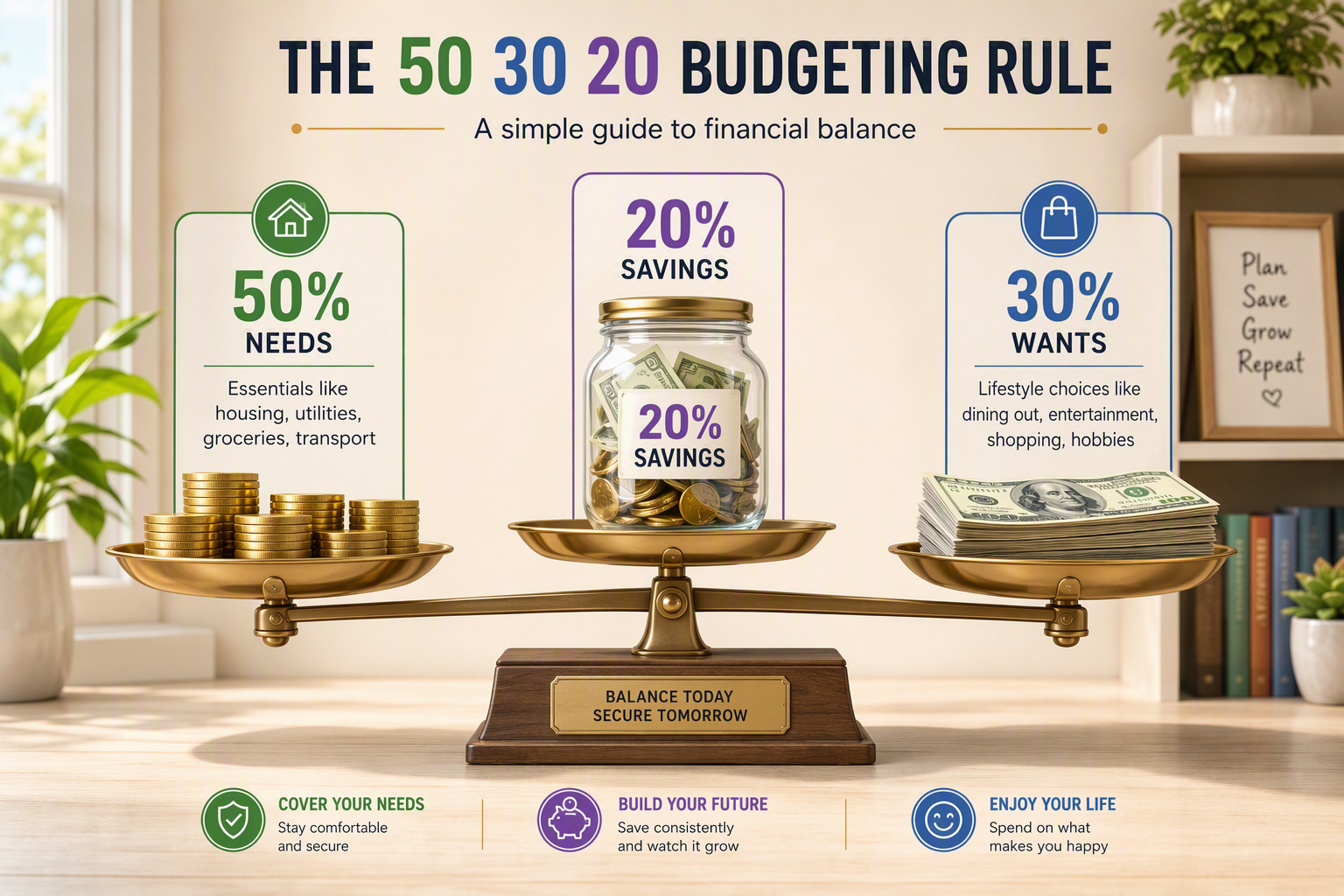
- The 50 20 30 rule is a simple budgeting method. You divide your after-tax income into needs, wants, and savings.
- It keeps your monthly budget real by making sure you pay for essential expenses first.
- This rule lets you use 30% of your money for things you like. You can still keep your money management on track.
- The last 20% goes toward financial goals. You use it for an emergency fund, debt repayment, and retirement.
- Setting automatic transfers to savings accounts can help. It makes following the system easier.
- You can change the percentages if your cost of living or financial situation shifts.
Introduction
Budgeting does not have to be hard, even if you feel like you need to keep track of every dollar. The good news is, there is a budgeting rule that helps make things simple. The 50 20 30 approach is an easy way to split your monthly income into three clear groups. This makes money management not feel so stressful and helps you stick to your plan over time. If you want a good, easy way to handle daily bills, the money you spend on life, and your savings in the future, this budgeting rule is a smart place to start.
Breaking Down the Budget Rule 50 30 20
This budgeting method is simple at its core. It splits your after-tax income into clear categories. You use 50% for needs. You use 30% for wants. You use 20% for savings or extra debt repayment. This is what people mean when they talk about the 50 20 30 rule of budgeting.
This way of managing your monthly budget works well because the straightforward framework is easy for most people to use. It gives your money structure without being hard to follow. Needs are the bills you have to pay every month. Wants are for the things you like to do and things you can change if needed. Savings help you feel good about your financial situation as time goes by. Now, let’s see why this rule is important and how each part of it can help you.
What Is the 50 20 30 Rule and Why Does It Matter?
The 50 20 30 rule is a simple way to make a budget. You split your net income into three parts. Put half of what you get in your bank account toward your needs. Then, use 30% for your wants. The last 20% should go to savings and debt repayment. You should use the money that comes into your bank account, not your gross income, when you use this budgeting rule.
What makes it good is how simple it is. You do not have to track every small thing you buy or use a hard system. You just look at big groups to help with better money management. This helps you remember the rule and stick to it every month.
This way of handling money helps with financial stability. You make sure your main bills get paid. You still have a bit left for fun. You also save for later, like retirement or things you do not expect. It works well for beginners in money management. It is good for workers with their first job. It can help families and others who want a simple plan for spending.
Core Principles Behind the 50 30 20 Budgeting Method
The best thing about this way to budget is that it has clear categories. You do not have to deal with lots of line items. You begin with your monthly income after tax. Then, you put all your money into needs, wants, or savings. This method helps the plan feel easy to handle, even if you are new to budgeting.
Its basic principles are easy to follow:
- Needs should use only up to half of your budget, if you can help it.
- Wants should fit in a set limit. Do not let them get out of hand.
- Savings goals should get a set share each month.
- Minimum payments go in needs, but any extra payment you make on debt goes in savings.
This way is different from other detailed systems. You do not have to track every little receipt. You just focus on the big picture and control your spending. A mistake that people often make is putting too many nonessential buys under things they need. This can mess up their plan before they know it.
Understanding Needs: The 50% Essential Expenses
The 50% category is for essential expenses. These are the living expenses you need every month to keep things going. This means spending on things like rent or mortgage payments, groceries, transportation, insurance, health care, utility bills, and minimum debt payments. These are necessary expenses, not extra costs.
This part of the plan is important because it puts your financial obligations first. When you take care of your needs, you are less likely to miss bills and feel money pressure. Then, you can see what needs look like in your daily life and learn how to spot the true essentials.
Examples of Needs in the Indian Context
If you use this rule in India, the way it works stays the same. The cost of living may change from city to city. Still, essential expenses are the bills and services you need each day. The main thing is to look at the function and not extra upgrades.
Typical needs may include:
- You need to pay rent or housing costs. You also have to cover your basic utility bills.
- You buy groceries and pay for transportation expenses. Health insurance is important too.
- Make minimum payments on loans or a credit card each month.
- A basic mobile phone plan is needed, and you should have some money to keep your bank account running.
The line between needs and wants can get unclear, especially if you start to add extras. A mobile phone is something most people need. But getting a premium device upgrade is not a must. Public transport helps you get to work, and that is a need. A pricier way to travel is something you might just want. Your budget will work better if you stay honest about the divide between these things.
How to Identify True Essentials for Your Budget
You can do a simple test to help you. Ask yourself if the expense is needed to keep your home running or to keep up with your financial obligations. If you say yes, then it is likely to be a need. If you can put it off without a big problem, it may not be a need and can go somewhere else.
Look closely at items such as:
- Mortgage payments or rent
- Utility bills and basic groceries
- Student loans and other minimum payments
- Insurance and core transportation costs
If you keep track of your spending for a month or two, it can help make things easier. Take a look at your bank statements, checking account, or use a budgeting app. Sort each transaction as you go. This way, you can see where your money goes. You can also spot which are essential items and which things feel needed at the time but really are not.
Allocating 30% to Wants Without Overspending
The 30% group is for discretionary spending. These are things that you do not need to survive. They help you feel good and enjoy life. Going out to eat, watching movies, taking trips, and buying luxury items are in this category.
This part of your income lets you have fun without hurting your future plans. The problem comes when things you want start turning into your everyday spending. To stop that, you should know what counts as a want. Make sure you enjoy them without causing financial stress.
What Counts as “Wants” Under the Budget Rule 50 30 20
Wants are things you pick to feel more comfortable, have fun, or make life easier. You do not need them for daily living. Discretionary spending and discretionary expenses are often found in your monthly budget.
Common examples of wants include:
- Entertainment, streaming services, and event tickets can add up.
- Vacations or trips that you do not need can take more of your money.
- Buying clothes, accessories, or phones that you do not really need is something to watch.
- Picking a pricey choice when a simple one will do, including public transport upgrades, is not always the best idea.
The same cost can fall into different groups based on the situation. For example, if you need basic internet for work, that can be a need. But if you get ultra-fast internet that you do not use, that is a want. A simple meal is something you need. If you eat out at restaurants many times, that is not needed. This difference helps keep the rule useful for people.
Tips to Enjoy “Wants” Mindfully and Avoid Common Mistakes
You do not need to take all the fun out of your budget. The main goal is to enjoy what you want, but with limits. A budgeting app can show you the things you buy again and again, before they become a problem. This can help, since small buys can add up fast and cost you more than you think.
Try these simple habits:
- Set a fixed limit for entertainment and dining.
- Review your spending at the end of each month.
- Make small adjustments instead of waiting for a crisis.
- Avoid borrowing from next month’s budget.
One mistake people make is thinking that every easy thing they buy is needed. Another mistake is not seeing new wants until these things cause financial stress. If what you want to buy is over 30%, start by cutting back on the easiest extras first. This way, it usually does not feel as bad as lowering essential spending or missing your savings goals.
Saving & Investing: The 20% Financial Security Bucket
The last 20% is all about your financial future. In this part, you set up savings accounts, start investing, and pay extra on any debt, not just the minimum payments. Doing these things will help you build an emergency fund, get ready for retirement, and make your financial security stronger.
To stay on track, keep an eye on this category the same way you watch the others. You can set up automatic transfers to move money from your checking account into your savings when you get paid. This helps you reach your saving goals with less effort. The next parts will talk about your saving options and how to decide what is most important to you.
Options for Saving and Investing in India
Your 20% bucket is meant to help with both staying safe now and growing your money for later. The product you use can be different, but the purpose does not change. You want to plan for your future goals, be ready for unexpected expenses, and aim for financial success as time goes on.
Here is a simple text table that shows the main options talked about in this framework:
| Option | Main Purpose |
|---|---|
| Savings accounts | Hold emergency cash and short-term money you may need soon |
| High-yield savings | Grow spare cash while keeping it relatively accessible |
| Mutual funds | Support long-run investing and wealth building |
| Retirement account | Build money for later life through regular contributions |
A balanced way is often the best. You should keep some emergency money in savings accounts you can get to easily. At the same time, you can use investing and retirement contributions to plan for the future. This way, you can deal with problems that come up now, but not lose focus on what is ahead.
Prioritizing Emergency Funds and Future Goals
Start with your emergency fund. This is money you keep for job loss, medical bills, or other unexpected expenses. It is good to have enough saved for three to six months of what you need. That cushion gives you real peace of mind when life changes.
When you get the basics done, you can use what you have left to work on future goals.
- Retirement contributions
- Extra debt repayment above minimums
- Investing for long-term growth
- Saving for major planned purchases
A lot of people think this part is not needed. But that is not true. You should not skip it. If you do, your financial security is put at risk. Even if you cannot save the full 20%, you should keep making steady progress. Doing your best to protect this money helps your budget stay strong over the long run.
Adapting the Budget Rule 50 30 20 to Different Lifestyles
Real life is not always easy to put into set numbers. Your cost of living could be high. You might also get income that is not the same each time. That does not mean the rule does not work. It just means that you may need to make small adjustments.
Think about the 50 30 20 split as a basic guide for your financial journey, not as something you must follow all the time. This split can help you, even if your life changes. What matters most is being careful about your needs, wants, and savings. In the next part, we will talk about how you can change this split and when it makes sense to do so.
Customizing the Rule for Irregular Income or Family Budgets
If you get paid different amounts each month, start by working out what your average pay is. Look at past deposits, or take the total from last year and divide it by twelve. This will help you get a steady number that you can use for plans. A family budget can do the same thing. Add up everyone’s income and the costs you share together.
To make it workable, try this:
- Make your budget using a smaller or average monthly income.
- Set aside a fixed amount for important bills first.
- If you get more income in any month, save that extra money.
- Keep checking your future needs and adjust as your expenses change.
This way helps even out cash flow. The budget will not be too hopeful either. If you do not know how to set real goals, getting simple financial advice from a trusted source can help. This lets you pick numbers that you can keep up with.
When and Why Should You Adjust Your Percentages?
You need to change the percentages if there is any big change in your financial situation. A raise, moving to a new place, a new child care cost, or a drop in your debt balance can all change what your budget needs. The first rule is helpful, but it is not the only way you can set things up.
Good reasons to make changes include:
- Your monthly income can go up or down.
- Your needs are always more than 50%.
- You want to pay off debt quicker.
- A budget calculator shows that your current split is not realistic.
The key is to make small adjustments and do it on purpose. If your minimum payment amount goes up or housing costs are higher, you may have to cut back on things you want for some time. Check your numbers often so the budget matches your real life and not an old plan.
Frequently Asked Questions (FAQs)
Are you wondering how the 50 20 30 rule of budgeting works? A lot of people want to know how this budgeting method can help make their money plan clear.
The 50 20 30 rule lets you split your cash like this. You use 50% of what you get on essential expenses, such as mortgage payments and utility bills. Then, you give 20% to your savings goals. These could be for retirement contributions or your emergency fund. The last 30% goes into discretionary spending for wants. These wants could include entertainment or dining out.
This simple plan helps you feel good about managing your money. You can lower stress and make your budget match with your financial goals. It’s a clear way to stay on track in your financial journey.
Is the budget rule 50 30 20 recommended by financial experts?
Yes, many financial experts say it is a good idea. The budgeting rule is simple. It helps with money management. You do not need to track too much or use hard methods. This financial advice can work for most people. Some may have to change the percentages to fit their needs.
Can you give a simple example of the 50 20 30 rule for a monthly income?
If you have a monthly income of $3,500 after tax, there is a simple way to split this. You can use $1,750 for essential expenses. Put $1,050 toward examples of wants, like eating at a restaurant or entertainment. Save $700 in your savings accounts or use it to pay off debt. Bank statements will help you see if this plan matches how you spend your money in real life.
Are there pitfalls to avoid when starting with the 50 20 30 rule?
Yes. Some things that can go wrong are counting too many extras as must-have costs, not paying attention to small things you buy, and leaving out the money you need to save. This budgeting method works best when you sort your spending the right way and stick to it. If your wants add up, you may feel higher financial stress, and it can keep you from moving forward with debt repayment.
Conclusion
The 50 20 30 rule for budgeting is a simple way to manage your money. You put 50% of your income toward things you need. You put 30% toward things you want. You put 20% into savings or investments. This rule helps you build a plan that balances enjoying your money and feeling secure about your future. It lets you see where your money goes and makes it easier to make smart and careful choices for your life. If you want to know how to use this rule for yourself, you can get a free talk with our financial experts today!

