
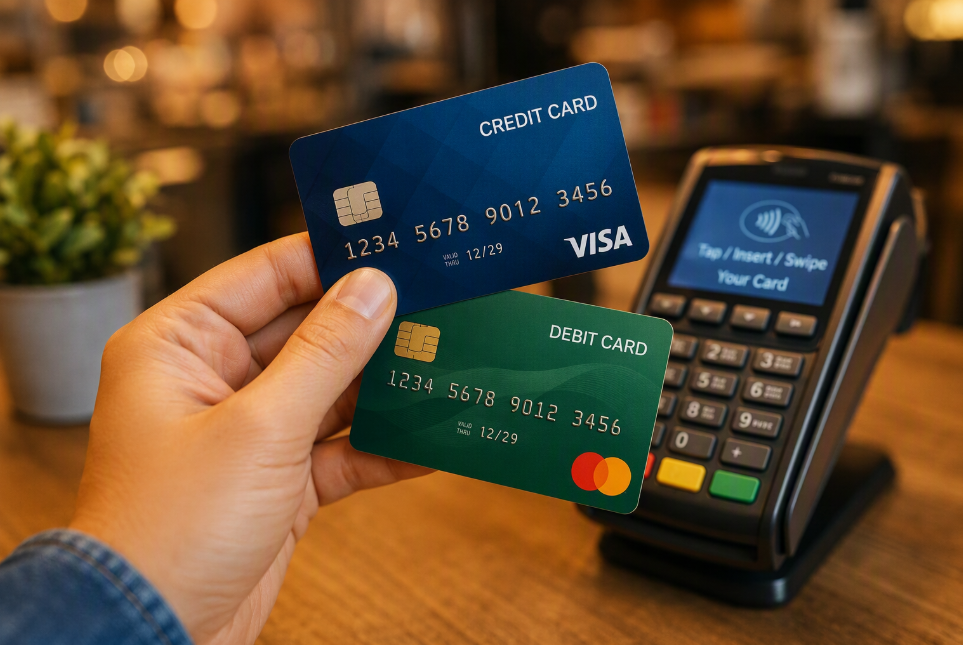
Key Highlights
- Credit cards let you get money from a card issuer up to your credit limit.
- Debit cards take money out of your bank account that you already have.
- If you use credit cards well, they can help build your credit score.
- Debit cards are good if you want day-to-day control and easy budgeting.
- When you do online shopping, credit cards often give you better fraud protection.
- Which card is best for you depends on your habits, your goals, and how you feel about borrowing.
Introduction
A payment card may look simple in your wallet. But the way you use it can shape how you manage your money. A credit card lets you spend now and pay later. A debit card takes money right from your bank account at the time you use it. This one main difference changes how you spend, the fees you pay, the rewards you get, your fraud protection, and your future borrowing power. If you want to know which card is best for your needs, this guide will explain the details in a clear and useful way.
Understanding Credit Cards and Debit Cards
At its core, the key differences are about where the money comes from. When you use a credit card, you are borrowing from the card issuer up to a set credit limit. You have to pay it back by a later date, usually shown in your monthly statement.
A debit card takes money straight from the checking account when you use it. If there is not enough money in the account, the payment might not go through. Sometimes, this can also bring extra fees. The better card for you depends on if you want the option to borrow money, or if you want to keep a closer watch on your spending. To help you see this, it is good to first look at each card on its own.
Definition and Key Features of Credit Cards
A credit card lets you use a line of credit given by a bank or another financial institution. You can use it to pay for things, do a balance transfer, or get a cash advance. You do not use your own money when you buy something with a credit card. You are borrowing the money and will need to pay it back.
Every month, you get a credit card bill. It shows the things you buy, any fees, your statement balance, and the due date. You can pay the full credit card bill or just make the minimum payment. If you do not pay the full statement balance and leave a credit card balance, interest charges will often be added.
If you use a credit card the right way, it can help you build your credit history. A good credit history can give you a better credit score. It’s important to pay on time and keep what you owe low. This matters a lot. A credit card can do this for you, but a debit card will not. A debit card often does not help your credit file at all.
Definition and Key Features of Debit Cards
A debit card connects to your bank account. Most of the time, this is your checking account. Sometimes, it may link to a savings account too. When you use a debit card to buy something, the money gets taken from your own account. It does not come from borrowed money, like it does with a credit card.
That means you can get your money right away. A debit card is also a convenient way to take out cash at an ATM. People use them a lot for everyday expenses, so you do not have to wait to get a bill later.
The big thing that’s different with a debit card is that you don’t borrow money. A credit card does let you borrow. A debit card takes cash from your own money when you make a buy. This can help you stay on budget. But if you do not have enough cash in your account, the stuff you buy may not go through. This could also cause an overdraft problem.
Main Differences in Usage and Functionality
When you look at both, the payment method is what makes the difference. A credit card lets you buy something now. You pay for it by a later date. A debit card takes the purchase amount from your account right away.
Here are the key differences that can change how you use them each day:
- Credit card offers can give you rewards, help protect your buys, and also help you build credit.
- A debit card will charge you for banking, going over your balance, or using some ATMs.
- A credit card can make debt, but a debit card will only let you spend what is in your account.
So, which one works better? If you want to have more choices and feel you can handle your payments, a credit card may suit you. If you want to control what you spend, a debit card can feel much easier to use. Next, let’s see the different types of each card that you can get in India.
Types of Credit Cards Available in India
Credit card companies give out different kinds of credit cards. Each card is made for a different reason. Some cards are good for people who buy things often. Some cards offer special perks for those who want more. Other cards are made for people who want to start or fix their credit history.
You might see different types of credit cards. These can be rewards cards, balance transfer cards, or a secured credit card. The best one for you depends on how you spend money, how you feel about fees, and what your financial goals are. Before you pick one, you should know what each credit card is used for and how it can help you.
Standard Credit Cards
A standard credit card is the most basic kind of card you can get. With this card, you can buy things during the billing cycle. After you get your statement, you can pay back all or part of what you owe. A lot of these cards are easy to use and simple to know about.
Some cards do not have an annual fee. But some come with one, depending on the company and what they offer. The statement balance shows what you owe at the end of the month. If you pay all of it by the due date, you can avoid having to pay interest on your purchases.
For many people, a credit card is the first card they get. A credit card can be helpful. You can use it for many things and keep track each month. A credit card also helps you build your credit history. When you compare a credit card with a debit card, the credit card gives you more freedom. But you need to pay on time to get the most from it.
Secured Credit Cards
A secured credit card is meant for people who do not have much credit history or whose credit is not good. When you get this type of credit card, you give a deposit first. The deposit is there as a backup for the company. The amount you put down also helps set the credit limit for your account.
Because the issuer added some protection, getting this credit card can be easier than with many cards that are not backed by protection. Even with that, the account works just like a credit card you use every day. The way you pay and how much you use or owe on this card may show up on your credit report.
A secured credit card can help you build or fix your credit history. This type of card is not like a debit card, because to get it, the bank will still look at your credit. A debit card is easier to get since you just need a bank account. If you use a secured credit card in a good way, it can be a practical first step for your credit.
Business and Corporate Credit Cards
A business credit card is used by a company and not for someone’s own spending. A financial institution gives this card to small companies, big companies, or business groups. It helps them handle travel costs, buy supplies, and pay for other things the company needs.
The best thing about using a credit card for your business is that it keeps things separate. Business costs do not mix with what you buy for yourself. This makes it easier to see where your money is going. The credit card bill comes each month. It lets you look at all the costs in one spot. This can make it easy for you to check your spending and plan your budget.
There is one more good point to talk about. When you use your credit in the right way, you can keep better control of your credit utilization. A business credit card can give you rewards or more safety on things you buy, compared with a debit card. But you need to be disciplined because any money you still owe can grow fast and cost more.
Types of Debit Cards Issued by Indian Banks
Banks in India give out more than one type of debit card. The features you get will depend on your account and the card issuer. Some debit cards are simple and are used for everyday things. Others offer more services or can give you special access.
Most debit card choices connect to a bank account like a savings account or a current account. You might get a prepaid debit card as well. A prepaid debit card is not the same as the others. You have to put money on this card before you use it. The text below will show you how each type works best for different people and their needs.
Classic Debit Cards
A classic debit card is the card you get when you open a bank account. This card helps you with easy shopping, atm withdrawals, and doing basic banking things. You can use the debit card in stores, buy things online, and take out cash from ATMs.
The main thing to know is this: you use your own money with this card. Every time you pay for something, the money comes out of your account. You can only spend what you have. This helps you keep track of your spending, and it makes the card easy to use for daily needs.
With a debit card, you do not borrow money like you do with a credit card. There is no monthly bill that you have to pay back. A debit card lets you buy things only if you have enough money in your account. That is why if you want simple control of your spending and less worry about debt, a classic debit card can be a good choice. A debit card keeps things easy and safe compared to a credit card.
Premium Debit Cards
A premium debit card is like a basic debit card, but it has some extra services. The things you get can change by card issuer. It may give better support, some merchant deals, or even reward points when you use it.
That said, premium does not mean it acts like credit. The money still comes from your linked account, and there is no line of credit here. You get more ease, but the main debit setup stays the same.
Some premium cards can have an annual fee or need you to keep certain things in your account. If you keep a good balance and like extra features, these cards can be good for you. If you do not need those things, a regular debit card may be all you need. The choice is about what fits your spending and if the extras are good for you.
Prepaid Debit Cards
A prepaid debit card is not the same as a standard debit card that is linked to your bank. With this card, you do not use money from your checking account. You add money onto the card ahead of time. You can spend the money on the debit card, but you cannot go over the available balance.
That built-in limit helps you manage the card better. When you use up the money on it, spending stops. You can only spend more if you add more money. The maximum amount you can use is clear from the start. This is good for people who want to stick to a strict budget.
A financial institution can give these cards to people who want to make electronic payments but do not have a bank account. Still, prepaid cards can have costs just to start or use. So, while you do not have to borrow money, there may be more fees with these than with a debit card that is linked to a bank account.
Payment Process: Credit vs Debit Cards
The checkout process is much the same because both cards use a card number and work on the same payment networks. You tap, swipe, or type your details online. The store gets approval in seconds.
Behind the scenes, things work in a different way. When you use a credit card, the company pays for the purchase amount first. Then the charge is put on your credit card bill and you need to pay it by the due date. If you use a debit card, the money is taken out from your account right away. You can see the difference more clearly when you look at each step in the process.
How Payments Are Settled with Credit Cards
Here is how a credit card works in everyday life. You buy something. If you have enough credit, the card company says yes to the payment. The store gets its money. The amount goes to your card account, not from your bank right away.
Over the billing cycle, your charges add up until the statement closes. The statement balance is what you have to pay for this time. By the due date, you need to pay either the full amount or at least the minimum payment due.
| Step | What happens |
|---|---|
| Purchase | The issuer authorizes the transaction |
| Statement closing | Charges are totaled into a statement balance |
| Repayment | You pay the full amount or the minimum payment due |
This payment method can give you some extra time. But if you do not pay off the full amount, you may have to pay interest charges.
How Payments Are Processed for Debit Cards
A debit card draws money right from your checking account each time you make a purchase. The store asks for approval, and your bank checks if you have enough money in your account. If you do, the payment will go through.
When you use this payment method, the money comes right out of your account. Your balance gets lower fast. That is why people say debit is a straight way to pay, not something you pay back later. The same account is used for atm withdrawals too. This makes it easy to keep all your spending and cash in one place.
For lots of people, this can feel simple because there is no bill that comes later. You get your money right away if the funds in your account are there. If the money is not there, the payment might not go through. It could also lead to overdraft problems.
Spending Limits and Overdraft Mechanisms
Spending limits change based on the card you use. A credit card has a credit limit. The financial institution sets this for you. A debit card is different. The money you can spend depends on what you have in your account. The card will not let you go beyond that.
That means that one card is based on the amount you are allowed to borrow, and the other one is based on how much money is in your account. People who use debit cards might also deal with overdraft problems if they spend more than what is there. To see how this can change the way you use money each day and how you plan for the future, look at both card types more closely.
Credit Card Limits and Credit Scores
Your credit card limit is the most you can use on your account. The company sets this number. They do this by looking at your income and your credit history. If you manage your account well, you can ask to raise the limit later.
How much of your credit limit you use can affect your credit score. Credit utilization means how much of the credit you have that you are using. A lower credit utilization is better for your credit score. It is also better if you make your payments on time.
This is one way a credit card is not the same as a debit card. A debit card will not help build credit history, because it does not report how you borrow money in the same way. If you use a credit card the right way, it can help you get a better credit history. But if you use it too much, it can also hurt you fast.
Debit Card Limits and Account Balance Constraints
With a debit card, you can only spend what you have in your account. Your available balance is your spending limit. If there is money, you can buy things. If you do not have enough, your payment may not go through. But if you have overdraft coverage, it may still work.
That helps you see the maximum amount better than with a revolving credit line. No matter if the card is with a checking account or a savings account, you spend the money that you put in. For a lot of people, this lets them keep better control over the money they have.
Still, overdraft can make things different. If the bank lets a transaction happen when there is not enough money, you may have to pay fees. So, while using debit can help you stay out of debt most of the time, it does not take away all the risks that can come with having a low account balance.
Fees, Charges, and Interest
Before you pick a card, take time to look at the cost. Credit cards may come with interest charges. They can also have late fees and other charges for special transactions. A debit card often skips borrowing costs. But you may still get banking fees.
The annual percentage rate is very important when you use credit. This is because it changes how much you pay if you do not pay off what you owe right away. Debit cards are different. They do not use the annual percentage rate the same way. Still, you may have to pay for some services or if you spend more than you have in your account. The next two parts will show you where these charges often come from.
Typical Fees with Credit Cards
Credit cards may be cheap if you pay all that you owe each month. If you do not, they can soon cost a lot. The biggest cost is interest charges if you still owe money. If the APR goes up, it will be more costly to keep debt from one month to the next.
You could also get charged for some actions or features on your account. These charges are not the same for every card or bank. That is why it is good to read the terms before you apply.
Common credit card costs include:
- There is an annual fee on some cards. This is usually for cards that give more perks.
- You will pay fees if you get a cash advance or do a balance transfer.
- You can get penalties for late payments or returned payments.
These costs come with using a card. You get to borrow money, earn rewards, and have some extra safety. If you are careful with how you use the card, you may pay less or even not have to worry about these costs at all.
Debit Card Charges and Banking Fees
Debit cards often do not charge interest. This happens because with a debit card, you are not borrowing money. That can be a big saving compared to using credit. Many times, you also do not have to pay an annual fee for the debit card, especially when you get it with a checking account.
Even so, some banking fees can be there. A financial institution might add monthly fees for keeping the account. It may also ask for money if you use an ATM in another country. If you do not have enough in your account, you could get charged for overdraft fees too.
Charges can come up when you use atm withdrawals at a different bank’s machine. So, using debit is not always free. Most of the time, it costs less than keeping a credit card balance. Still, you need to read the account terms to avoid any surprise charges.
Security, Fraud Protection, and Online Shopping
Security is important every time you pay, and this is even more true for online purchases. Credit and debit cards now come with good security features. These include EMV chips and tools that check each transaction to help stop misuse.
Fraud protection is still not exactly alike for both. Credit cards often give more legal and practical protection. A debit card can put your own bank money at risk faster. This does not make using debit unsafe, but it does mean that you have to act fast if there is a problem. In the next parts, we talk about how each card deals with fraud protection and online shopping safety.
Security Features of Credit Cards
Credit cards have several security features to keep your account safe. One of these is the EMV chip. This chip helps protect your card number when you use it. Companies also watch your account and check for any strange actions. If you use your credit card number online, your bank may ask for more checks before they let the payment go through.
A big edge is fraud protection. If you tell your bank about any use you did not allow right away, you are often safe by law. You may only have to pay a small part, or nothing at all. Many companies also have zero-liability rules, so you do not pay for fake charges while they look into the problem.
There is one more layer of safety here. The card does not take money right out of your bank account. If there is fraud, you do not lose your daily cash like you would with a debit card. For many, this is why credit is a better choice when there is more risk in the purchase.
Security Features of Debit Cards
Debit cards now come with strong security features. Most of them use EMV chips. They also give alerts and have account monitoring. When you use a debit card in stores or at ATMs, you need to enter a personal identification number. This makes it harder for people to use the card without your permission.
Many banks let you use fast controls with mobile banking. You can lock your card, check your payments, or let them know if you see something strange—all right from your phone. This makes it easy for you to move fast if you think there is a problem.
The big concern here is timing. A debit card connects right to your bank account. If someone uses it in a bad way, you can lose your money fast. There are some rules to keep you safe. Card issuer networks give some help too. But, to get the most help, you need to say something quickly. If you wait, you could end up owing more money.
Which Card Offers Better Safety for Online Transactions?
For online shopping, a credit card can be a good choice. Both credit cards and debit cards have safeguards. A credit card often gives better fraud protection. You also will not see disputed charges taken out from your bank balance while the issue is looked at.
That does not make a debit card a bad choice. It just means when there is fraud, you feel it more right away. This is because your own money is being used.
Why credit often has the edge:
- A credit card can give you better legal help when you have a problem with a charge.
- Fraud with a credit card will not take cash out of your checking account right away.
- Most issuers send quick alerts and offer zero-liability help.
If you shop online a lot, using a credit card can help you feel more at ease. If you use a debit card, you should watch your transactions often and let the bank know right away if you find any problem.
Benefits of Using Credit Cards
Credit cards can do more than help you pay for things. They can also give you rewards, cashback, and help you build your credit. You get some freedom because you can buy now and pay later.
They can give you purchase protection that you do not always get with debit cards. Some people like to use credit for things like travel, online orders, and anything they plan to buy. The value comes from how well you use your account. The next parts talk about the biggest benefits you get when you use credit in a good way.
Rewards, Cashback, and Credit Building
One big reason that people use credit is to get something in return. A lot of cards give you rewards points, miles, or cash back when you buy things. If you are going to spend the money anyway, these extra rewards can be good for you.
Another big thing is what happens over the long run. If you use a credit card the right way, it can help build your credit history. It can also make your credit score go up as time goes by. A debit card does not work the same way. A debit card does not show lenders how you use money you borrow.
Credit card advantages often include:
- You can get rewards points or cashback when you buy things that qualify.
- If you pay on time, it can help you build a credit history.
- A better credit score can make it easier for you to borrow in the future.
These benefits are most useful when you do not have high balances that cost you more money. Rewards can be good. But they work best if you do not let them make you spend more than you should.
Purchase Protection and Travel Perks
Many cards give you more than just rewards. Some of them also give you helpful protection when you buy things. If an item gets damaged, is lost during shipping, or you cannot return it to the store, purchase protection may help. This support depends on the card terms.
Travel is one more way that a credit card can stand out. Some cards have extras that help you travel with less worry and can also save you money. These things are the reason people look at many credit card offers to find the best one.
Examples of added value include:
- You get purchase protection for some things you buy.
- You can have extra warranty help at times.
- Some top cards give you travel perks, such as insurance or lounge benefits.
Not every card has every feature. But when you use credit instead of debit, you often get more help if something goes wrong after you buy something.
Benefits of Using Debit Cards
Debit cards work in a different way than other cards. They help you stay out of debt because you only spend what you have in your account. You do not borrow money or worry about a big bill later.
That is why the debit be a good choice for budgeting, getting to your cash fast, and everyday spending. If your money is in a checking account or a savings account, using debit will help keep things clear and simple. Many people like to use debit for regular buying, even if credit comes with extra perks. The next parts will show why people feel better using debit for most everyday things.
Avoidance of Debt and Budgeting Ease
A debit card lets you pay for things straight from your checking account. When you buy something, the money comes out right away. This means you can keep better track of your money and stay within your budget. A debit card also helps you not use more money than you have. That way, you will not build up balances that are hard to pay back.
For people who do not like to borrow, this can feel good. The card lets you use money you already have right away. So, every time you buy something, you know what is left in your account.
Why many users like debit:
- It helps people avoid debt because they only spend the money that is in the account.
- It is easy to make a plan for your money, because you can see what you spend right away in the account.
This structure is easy to use, and it is often the best thing about using debit instead of credit. You may not get some perks, but you do get more control over your daily money choices.
Immediate Fund Access and Simplicity
Sometimes, simple can be best. A debit card lets you use your own money right away. You do not have to worry about any billing cycle. There is no repayment schedule, and you do not have to pay interest. If your financial situation means you need to keep close track of your money, this can make every day feel easier.
You can use the same card for atm withdrawals, buying things in stores, and paying for things online. Since you spend money right from your account balance, you will know what you can afford at the time. There is no guesswork.
Key practical benefits include:
- It is easy to get cash or money when you have a checking account or savings account linked.
- You can see your spending right away because every buy changes your account balance fast.
For people who want simple banking and not rewards, a debit card can feel like a better choice. It works well for those who just need to manage their money without extra offers or points.
Risks and Drawbacks
Every card type has its own good and bad sides. If you use a credit card and spend more than you can pay back, you might get into debt. Debit card use can also be a problem if you don’t have enough money in your account when you need it.
The risks for each are not the same. Credit can harm your money if you have interest or miss a payment. Debit can take away some freedom. It can also let someone get to your bank money faster if there is fraud. To choose better, you need to know what could go wrong with both options.
Risks Linked to Credit Cards
The main risk people face with a credit card is spending too much. Since you do not use cash from your account right away, it is easy to forget how much you spend. If your credit card balance starts to grow, it can be tough to deal with, especially if you do not have extra money coming in.
It can get expensive fast if you miss payments on your credit card or carry a balance. Credit card interest rates are often much higher than what you pay for other types of loans. Plus, late fees can add to what you owe and make it harder for you to pay off your credit card.
Common risks include:
- You will pay high interest if you do not pay off your whole balance.
- If you pay late or miss a payment, it can hurt your credit report.
Credit cards are good to have, but you need to use them with care. If you borrow money without thinking, you may pay more than you want. It is important to be smart with your credit card so this does not happen.
Limitations of Debit Cards
Debit cards keep you away from paying interest, but there are some things they can’t do. The biggest thing is, you can only use the money you have in your account. There may be bank rules about your balance. There may also be limits on how much you can spend in one day.
That can help you stay in control. But it might be hard when you need to make a big buy or have an emergency. At those times, the spending limits can feel tight because you can only use the money you have. A credit line might give you more to spend in those moments.
There are some real problems too. If someone does fraud, it can take your cash fast. Using debit for things like rentals can also be not so easy. You can use debit cards for cash withdrawals with no trouble, but other than that, debit cards may not give as many rewards or protections as credit cards. So, using debit can help with debt, but it may also give you less freedom.
Approval and Eligibility
Getting a card is not the same for both types. A credit card often needs an eligibility check. This is because they want to see if they will give you money.
A debit card is easy to get. When you open a bank account with a financial institution, you usually get the card as part of the process. Because of this, getting approved for a debit card is much simpler and faster than getting a credit card. The points below will help explain why there is a gap between the two.
Getting a Credit Card
When you go to get a credit card, the card issuer checks if you can get it or not. The card issuer looks at how likely you are to pay back the money on time. They do this because they give you a line of credit. The card issuer wants to know you will pay back what you use.
The review might look at your income, any money you still owe, and your credit report. If you have good credit, you can get better offers. These can include offers with rewards or special features. People who do not have much credit history may get starter or secured cards instead.
Common approval factors include:
- The amount of money you make and if you are able to pay back what you owe.
- What is in your credit report and how you have paid your bills in the past.
- If you already have good credit habits.
Credit approval is a lending choice. This is why the process for credit is more careful than just getting a debit card that is tied to your bank account.
Obtaining a Debit Card
Getting a debit card is simple for most people. When you open a bank account, the bank or the card issuer gives you a card. You can use this card for payments and to get your money. The bank does not have to check your borrowing because you are not getting a line of credit.
The main thing you need is the account. This can be a savings account or a current account. The kind of account you use depends on your banking setup and the type of card you get.
What is usually needed:
- You will need to open a bank account and keep it active.
- The bank will ask you for some simple papers about you to start the account.
- A card issuer will send a card to you, and it will be connected to that bank account.
This is why it can be easier to get a debit card. The bank lets you use the money in your own account. The bank is not looking at you to give you a loan or anything like that.
Acceptance and Usage Locations
In many cases, both types of cards work at the same shops and stores. If the place takes your card issuer’s network, you can use your payment card when you check out in person or on the internet.
Credit card use and debit card draws are not always the same each time. In some cases, you may find that one is better than the other. This is true when you have to deal with things like holds, deposits, or waiting for the money to go through. The next parts will help you see where a debit card or credit card works better in India. You will also find out how using both of them together can be a good idea.
Where Can You Use Credit Cards in India?
A credit card is a type of payment card that you can use in most places where the network is accepted. You may use it in retail stores, on websites, and at service businesses. A credit card helps you pay for both your everyday shopping and big things you plan to buy.
It is good to use for online purchases because many people like the extra fraud protection and help with disputes. This is why credit is often picked for travel bookings, electronics, and other things where risk may feel higher.
In India, the way a credit card gets accepted depends on the merchant and the network. Most big sellers will take your card, and the use of credit cards is common. But, you may find that some small shops do not accept every card. So, it is good for you to keep another way to pay, just in case you cannot use your credit card.
Where Can You Use Debit Cards in India?
A debit card is used a lot in India. People use it in shops, for digital payments, and for many things they buy every day. A debit card connects to your bank account. Most people use this card first when they buy groceries, shop in local stores, or pay their regular bills.
Debit does more than help the user shop. It is also what most people use for atm withdrawals. This means you get cash easily and also pay with your card when needed. This extra use makes it good for all your banking needs in just one card.
The only thing that can stop you is your available balance or some rules the bank might set. So yes, you can use debit cards in a lot of the same places you use credit cards. The main difference is not where you can use them, but how the money is taken for the transaction.
Using Both Card Types Together
For a lot of people, it is best to not stick with just one payment method for life. You can choose what works best at different times. Credit and debit help you in different ways with your money.
You can use your credit card for things where rewards, better payment tracking, or extra protections are important. Then, use your debit card if you want quick cash or to keep your daily spending in check. This way, you get both the flexibility of the credit card and the control that comes with debit. This is a good balance for most people.
A practical split may look like this:
- Use credit when you order things online or when you want to buy something big.
- Use debit for your daily spending and to take out cash from an ATM.
- Pick the card that fits your financial goals and what makes you feel good about how you spend money.
This way, you get several options. You do not have to put every purchase in the same system.
Conclusion
To sum up, it is important to know how credit cards and debit cards are different. This will help you make better money choices. Each card has its own good and bad points. You need to look at how the card handles spending limits, fees, and security features. When you think about what you want and need, you can pick the card that fits your life. This can be about growing your credit, getting rewards, or keeping your budget in check. If you are not sure which card to choose, you can ask for a free consultation. You will get help to find the best financial tools for you. Your financial health matters.
Frequently Asked Questions
Is a credit card or a debit card safer for online shopping?
For online shopping, the credit card is safer. It has good fraud protection. If you have a charge you do not agree with, your money will not be taken from the bank right away when they review it. A debit card also has nice security features. But fraud can hit your money faster.
What fees should I expect with credit cards versus debit cards?
Credit cards can have several fees. These can be interest charges, annual fees, late fees, cash advance fees, or even balance transfer fees. Debit cards do not usually have interest fees. Still, the bank can make you pay other costs. These can include overdraft charges, fees for keeping your account, or extra fees for some ATM use. The fees you get will depend on your bank.
How does the approval process differ between credit cards and debit cards?
Getting a credit card takes more time than a debit card. For a credit card, the bank will look at your past money history and see if you are good with money. A debit card is not the same. You just need to have a bank account, and the card will use the money you already have in it. Because of this, you can get a debit card faster than a credit card.

